Back to New
My children go back to school on Monday.
I realize that for my French and US readers, August 17th is still very much summer. But in our house, la rentrée has arrived.
I’ve written about la rentrée before. In fact, almost exactly a year ago, I wrote about why I find myself using the French word even when I’m speaking English. (For the whole piece and a picture of my first day of school in 1995, it’s here)
“Back to school” just doesn’t capture it.
Last year, I was thinking about the parallel with returning to work after maternity leave: if we recognize the preparation, adjustment and growth involved when children return to school, why don’t we give women the same consideration when they return after having a baby?
I’m still thinking about that. It is my line of work, after all.
In fact, creating a rentrée for new mothers—making the transition clear and consistent—has been one of our primary focuses this past year as we’ve developed a new platform for companies to do exactly that. More on that below (and here).
But this year, for the first time, I don’t just have three children’s schedules to manage. I have three different establishments: daycare, primary school and secondary school.
And yes, two of them start and finish at exactly the same time.
As I sit here updating the Google Doc of extracurricular activities—and can still see the schedules from the past four years—I’ve realized there’s something else I like about la rentrée.
We’re never really going back. We’re always going forward.
On top of the backpacks, shoes, clothes and supplies to buy, there are also new schedules to build and new activities to discover.
It’s back to school, but it’s all new too.
And this year I’m going all in on the details.
The schedule isn’t just who needs to be where and when. It’s how each child gets there: bike, scooter or cargo bike. It’s when they need to do their homework, or read, and the days that they are allowed to watch TV.
And alongside their schedules, I’m building mine. And, I’m just as invested in my extracurriculars. Yes, I can take tennis lessons too. And exercise can have an actual place on the schedule rather than fitting into whatever space is left here and there.
I’m even attempting a block schedule for my working week, because outside of ballet on a laptop, writing LinkedIn posts is considerably easier than creating Canva graphics.
Every rentrée is a return to routine—but never quite the same routine.
The children are a year older. Their needs have changed. Our work has changed. We have changed.
We don’t simply restart what we were doing in June.
We build the next version.
Maybe that’s the part we’ve missed about returning to work
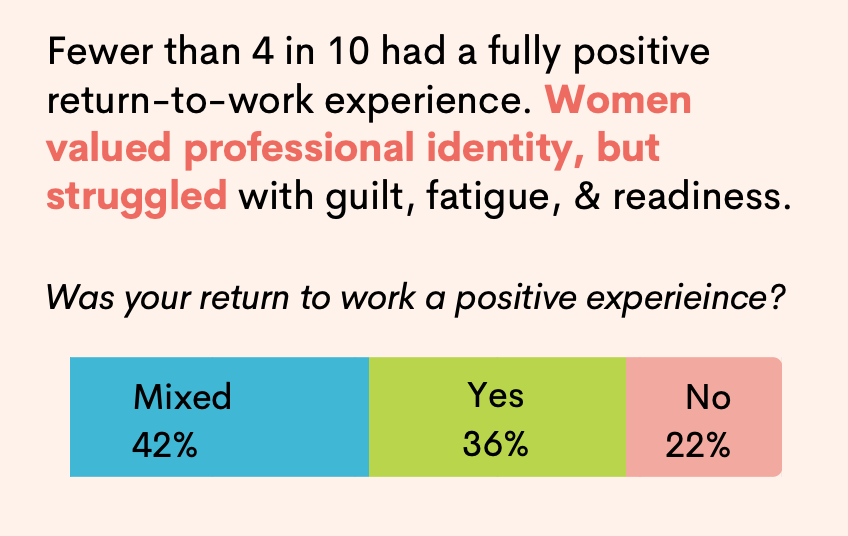
Last year, we explored Postpartum at Work through the lens of mothers and HR managers. And in our 2025 research, only 36% of women described their return-to-work experience as fully positive.
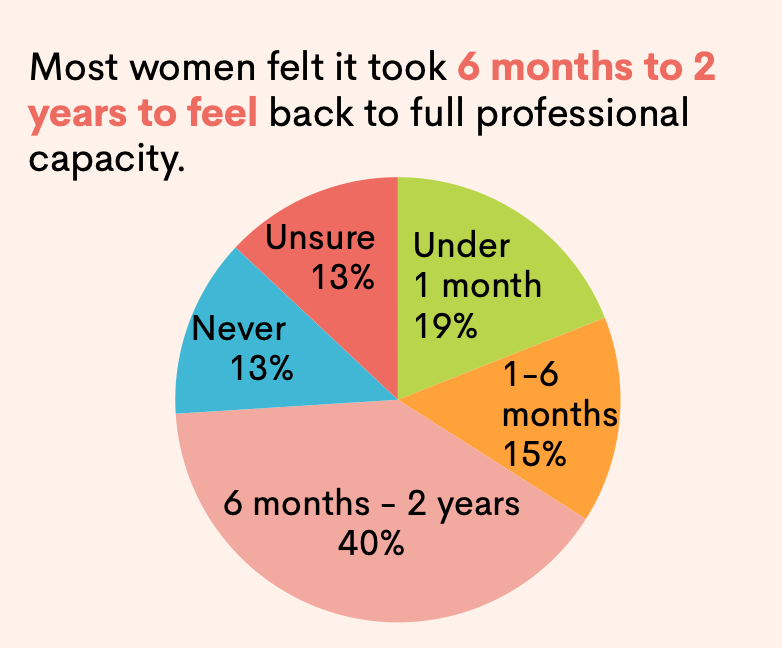
40% of women said it took somewhere between six months and two years to feel back to full professional capacity.
That makes sense when you stop thinking about return to work as going back.
A woman isn’t returning to the life she temporarily paused.
Her body has irreversibly changed. She may still be sustaining life by breastfeeding or pumping milk at work. Her responsibilities have changed and with that perhaps her priorities at home and at work. Some of the things that mattered before, just might not be as important as they were before (and the neuroscience backs that up - e.g. the default mode network we discussed at The Female Brain masterclass.)
Yet the workplace she returns to is often designed around the assumption that the goal is to get her back to where she was.
Perhaps we should be helping her build what comes next instead.
Prepare, practice, adapt
For children, we plan for an adjustment period.
We prepare. We talk about what’s changing.
I’ve drawn a map of the different routes my oldest son will take this year. There’s the bike-to-school route, the scooter-to-school route, the scooter-to-judo route, the bike-to-tennis route and the bike-home-from-afterschool route. We’ve practiced them all.
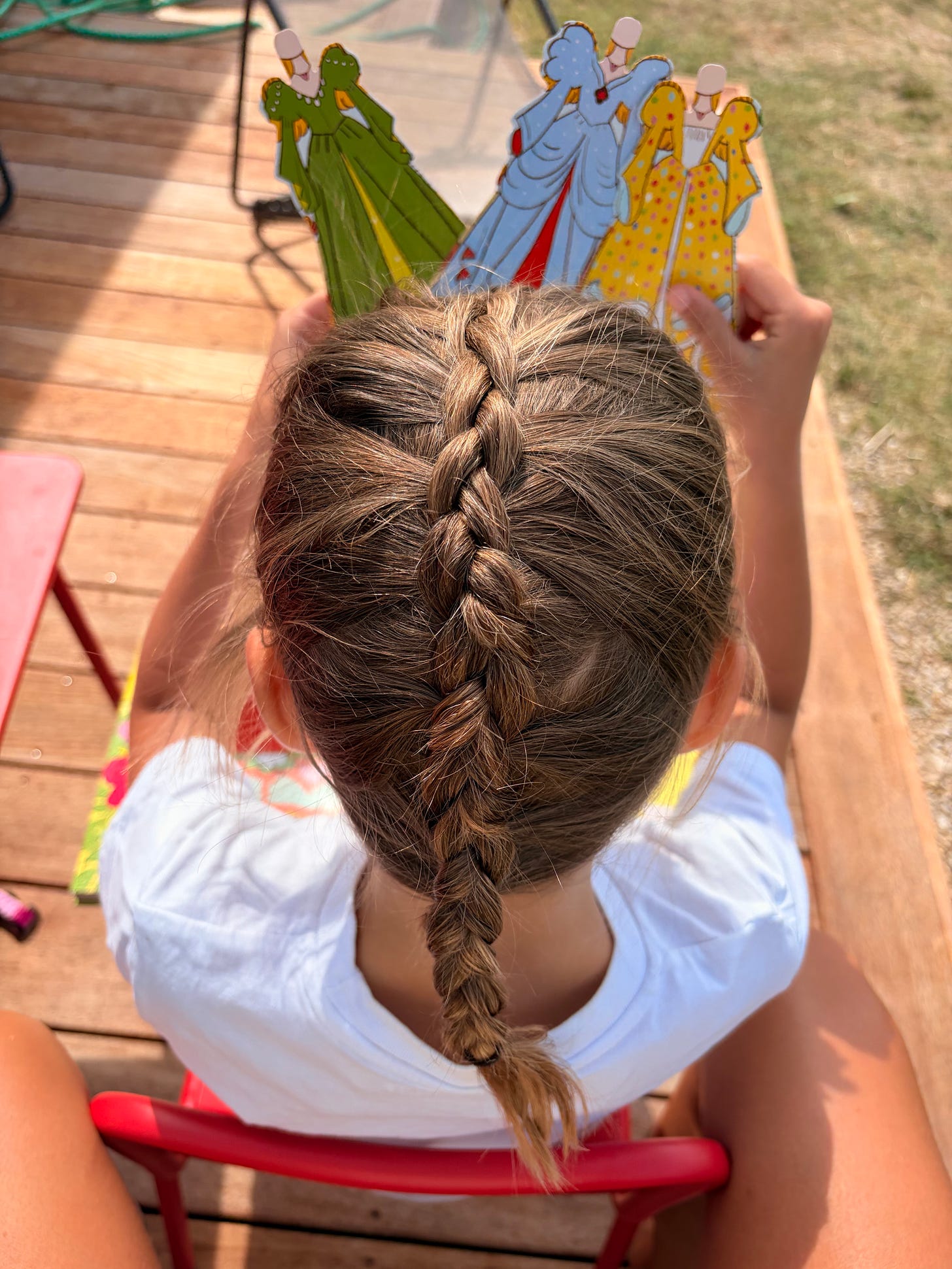
We’ve even test-run new hairstyles with my daughter.
We establish new routines. We anticipate the hard points. I’ve already promised stars on our star chart to my little ones if they manage drop-off without crying and clinging to my leg.
And then we see what happens. We certainly don’t expect the first week of school to tell us how the entire year will go. We’re ready to adapt.
Workplaces could approach a return in much the same way.
Have a conversation before leave about expectations and contact. Hold a proper return-to-work meeting. Build in flexibility during those first weeks. Check in again a few weeks later to ask what’s working and what isn’t.
None of this is particularly revolutionary.
None of this is complicated.
The hard part is making sure it actually happens—and that it happens whether you have a fantastic, experienced manager or someone managing a parental leave for the first time
Clear is kind. Period.
And yet, this kind of clarity is still surprisingly rare.
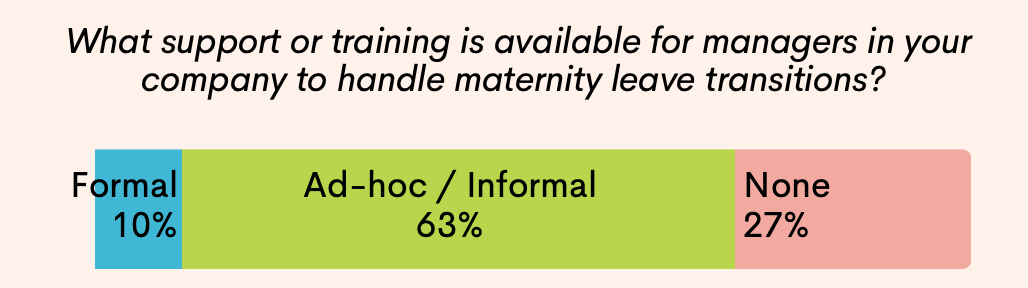
In our research, 63% of companies provided only ad-hoc or informal guidance to managers handling maternity transitions, while another 27% provided none at all.
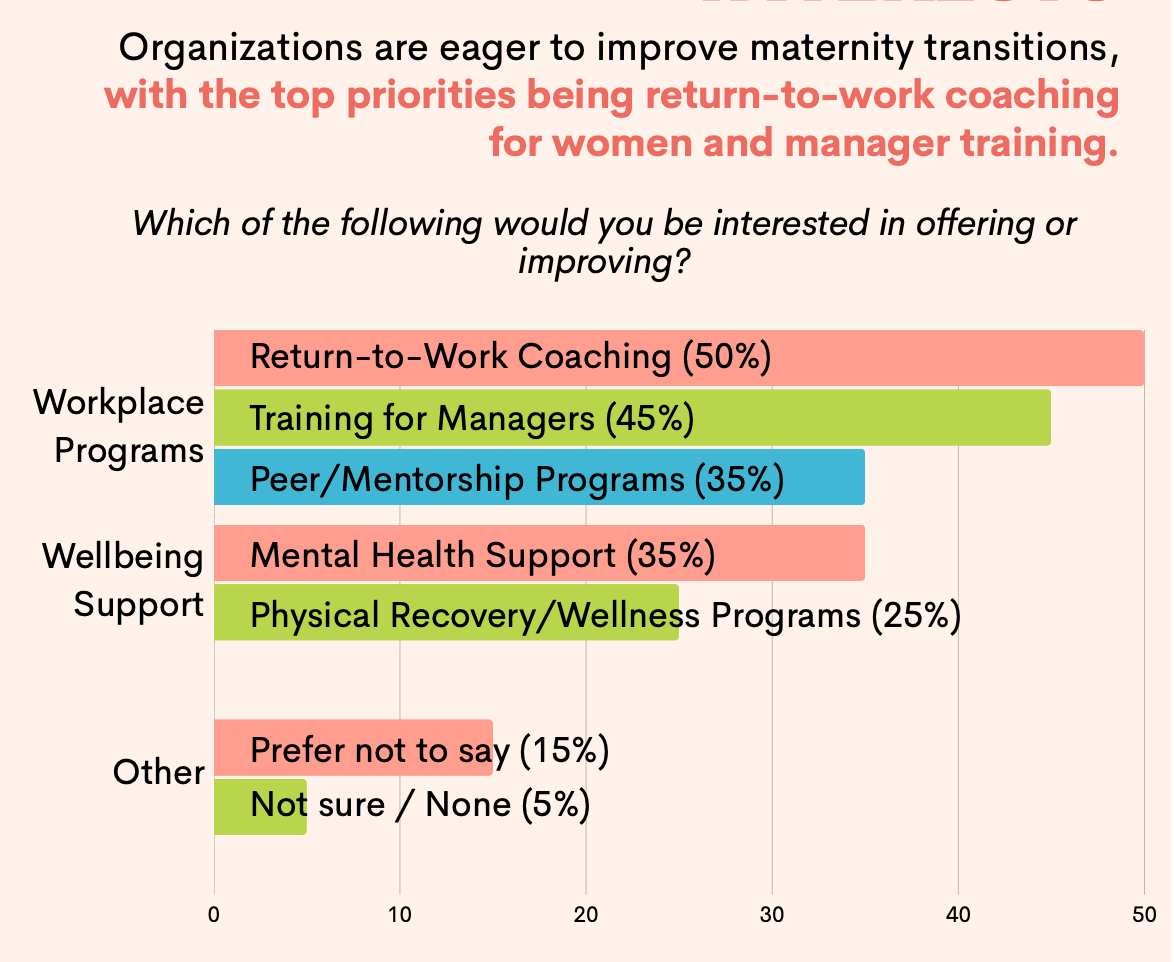
It wasn’t necessarily because they didn’t want to do better. Half of the HR professionals we surveyed wanted to offer or improve return-to-work coaching, and 45% wanted better manager training.
The intention is there. The structure often isn’t.
And that, essentially, is what we’ve built with our new platform.
Making the rentrée easier
Companies want to support parents. Managers often want to do the right thing. Employees want to have open conversations.
But the process is frequently informal, inconsistent or dependent on the individual manager.
Our research found that more than a third of women received no employer support during or after maternity leave, and perceived company support actually dropped after women returned.
So that’s what we’ve built. The platform basically makes sure everyone knows what they should be doing and talking about at each stage—from preparing for leave, to deciding how (or if) to stay in contact, to those first months back at work.
There are things for the employee to think through, things for the manager to do, and specific moments when they need to sit down together.
Simple. But hopefully much harder to forget.
Not to add another HR process.
But to make sure the important conversations actually happen, at the right time, and that the experience doesn’t depend entirely on whether someone happens to have a great manager.
Because the first day back isn’t the end of the transition.
It’s the beginning of a new one.
We’re beginning beta testing in September. If this is something your organization needs—or you simply want to see what we’ve been building—you can join the list here.
Version 1
This weekend, I’ll be finalizing Version 1 of our transition: school runs, sports schedules, grocery and cooking times, work blocks and exercise slots.
Some of it will work.
Some of it absolutely won’t.
By September, perhaps we’ll have found our rhythm. Or we’ll be on Version 3 and I’ll have discovered that one of my beautifully planned bike routes is completely unrealistic.
Either way, we’re not going back to last year’s routine. It wouldn’t work anymore.
And that’s probably the point I’ve been circling around this whole newsletter: a good transition isn’t about getting back to where you were. It’s about figuring out where you’re going next.
For a family. For a child starting a new school year. And, yes, for a woman walking back into work after having a baby.
Back to new, I suppose.
Stay Curious,
Erica
If you’re interested in what workplaces can actually do differently, read our 2025 whitepaper, The Untold Story of Postpartum at Work. It brings together the experiences of women and HR professionals across the US and Europe and includes practical recommendations for improving the transition.
Meanwhile, the 2026 whitepaper is well underway. This year, we’ve been speaking with fathers and managers as we look beyond maternity leave at how families and workplaces are adapting as the old defaults around parenthood begin to shift.